Fashion

Report Card: S/S ’16 Ad Campaigns

The new ads are in, and the results are not great my friends. Brands and spokespeople were mismatched, art direction was lackluster, and ads had a somber quality to them, perhaps stemming from the recent upheaval in the industry and the hit that the luxury markets have taken in China. Let’s discuss.

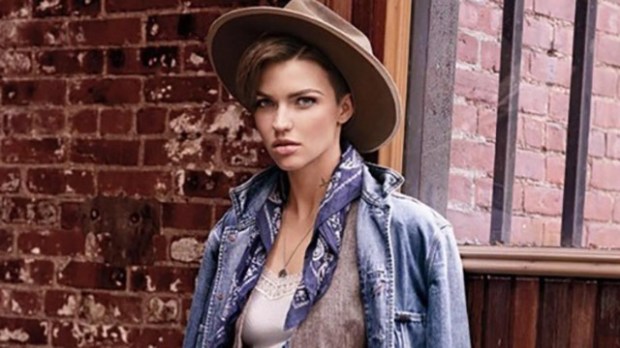
Ruby Rose for Ralph Lauren Denim Supply
640_ruby_rose_hailey_baldwin_ralphlauren_010615.jpg

Oh. Oh dear. This keeps eliciting laughs from me. I know Ralph Lauren is under new management and in desperate need to project a younger, cooler image (may I remind you that Ralph Lauren is a major sponsor of Masterpiece Theatre). It’s like they watched The Grapes of Wrath  on a TV with poorly-operating antennae, put on a blindfold, and threw a dart at a young celebrity that codes for cool and edgy. This is a tragic mismatch, and the result is schadenfreudeish. The corresponding video is even worse, bringing this depression-era Madewell shopping spree to life — the only redeeming quality of the digital component is the presence of a hedgehog.

Who would be a better face of Ralph Lauren (providing there’s better art direction)? It’s tough to say, seeing how this big brand has become amorphous and bloated by offshoot lines in the past ten years. I would go for an all-American face, like none other than Lauren Bush Lauren. She’s close to the brand, yes, but she’s an accomplished social entrepreneur with ties to two American dynasties — and Ralph Lauren is all about living the American dream. And if Tom Ford can star in his own campaigns, LBL can advertise for her in-laws.

Grade: D


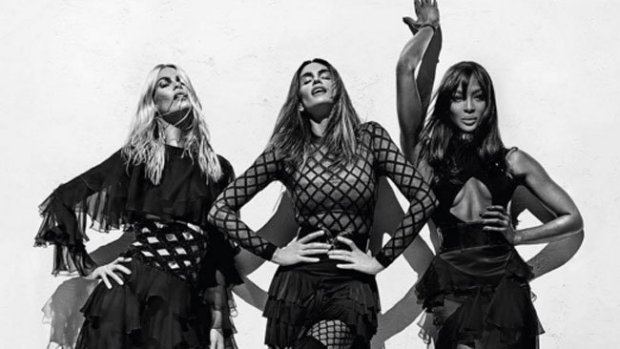
Claudia Schiffer, Cindy Crawford, and Naomi Campbell for Balmain
dynamic_resize.jpeg

This is great. It’s all the glamour and drama associated with Balmain, but without the off-putting high-maintenance flashiness. The black and white is subdued, and a nice departure from the garish colors that we’ve seen from Balmain recently, but there’s so much movement that it’s still electric — Cindy’s face and body is exquisite here.

Choosing the original Supers to font this campaign was a great move, because it capitalizes on 90’s nostalgia, and restores some sophistication to the brand after last season’s Jenner sisters ad. It’s also nice in conversation with the Balmain x H&M campaign, which featured the “Supers” of today, Gigi, Kendall, and Jourdan, whose looks mirror those of Claudia, Cindy, and Naomi.

Grade: A-


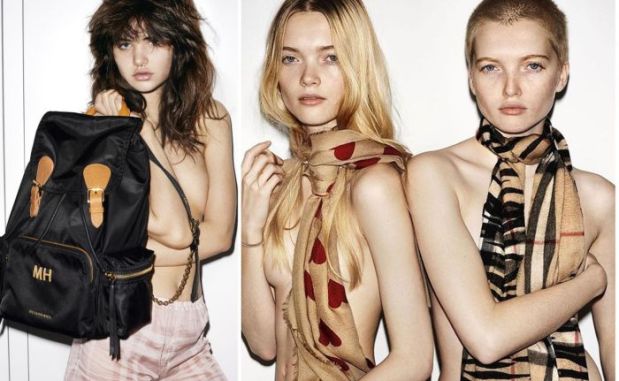
Assorted Teens for Burberry 
burberry-1.jpg

Burberry is catering to a younger crowd with this campaign, with its choice of up-and-coming young models like Ruth and May Bell and Dylan Brosnan, its debut of Snapchat (why?), and the grittier aesthetic portrayed here with a Juergen-y high-exposure flash. This makes sense, given that Burberry’s sales were down the last quarter, and Christopher Bailey has been under pressure to prove himself as CEO. Digital innovation under his guidance got the brand to where it is today, so it’s natural that he would double down on this strategy when he’s feeling the heat.

I’m not sure this is the right tack, however. It’s incredibly alienating to more sophisticated buyers and cheapens the brand’s heritage history by making it seem young and ephemeral. Although it’s important to stay relevant to a younger demographic, teenagers aren’t the group with the purchasing power Burberry needs. They need to keep their messaging consistent with what they did in their holiday campaign, and sell aspirational, inclusive, glamorous, British sophistication, which is what they do best.

Grade: C-


Zoë Kravitz and Anna Ewers for Balenciaga
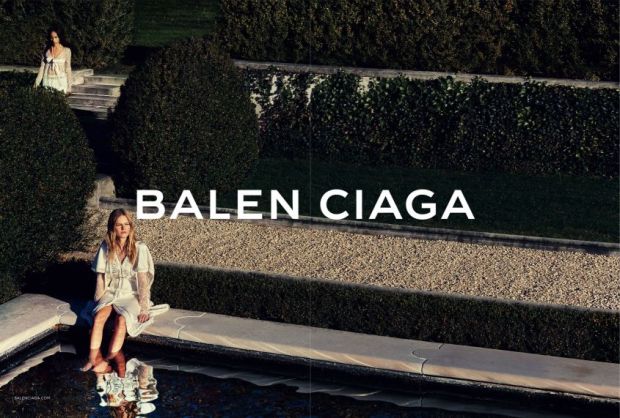
balenciaga-zoe-kravitz.0.jpg

Finally! Someone took my advice and put Zoë Kravitz, intriguing chameleon of cool pedigree, in an ad campaign. I love the sleepy, romantic panned out shot of the two women, but the close-up shots are empty, uninteresting, and tell me nothing about the brand.

This is not a great way for Alexander Wang to end his short legacy at Balenciaga — this looks hastily done and doesn’t come across as a thoughtful farewell. If he were going to cop out, he ought to have shot Kravitz holding the Le Dix bag and called it a day. (Does anyone know if the label will continue to make these post-Wang? If not, I’ll need to acquire a loan immediately.)

Grade: C-


Starman, the Ad-man

davidguitar2

Tommy Hilfiger, 2004

Fashion publications have made much of David Bowie’s contribution to fashion and his inimitable personal style in the days since his death, and rightly so. But I’d like to talk about his unique role in fashion advertising.

Throughout the course of his decades-long career, he appeared in a handful of ads for companies ranging from Pepsi to Louis Vuitton, unlike any of his iconic contemporaries in music, who never fronted major consumer campaigns (the one exception being Keith Richards’ 2008 Louis Vuitton campaign). Why was Bowie coveted for campaigns more than any of the other rock stars?

It’s because of the duality of what he codes for in the culture. He’s simultaneously perceived as a cool, weirdo genius, and then as a complete cypher, making it easy for advertising to project whatever they want onto him while benefiting from his cool cultural cache. Additionally he, more than any other rock stars or any other cultural icons, exudes an almost otherworldly self-possession and comfort in his own skin, which is what every consumer company is trying to sell. He’s so untouchable, so icy, so alien, so intellectually weighty, and, despite his rolodex of zany characters, he always plays himself in ads, which makes them some of the most effective campaigns I’ve ever seen. Exhibit A:

Louis Vuitton, “L’Invitation Au Voyage,” 2013

In this short film and corresponding print campaign, Arizona Muse arrives (via hot air balloon) to a mysterious Venetian masquerade party straight out of Sofia Coppola’s Marie Antoinette. Bowie plays “I’d Rather Be High” on the harpsichord as revelers revel and Muse orients herself among the partygoers, uncertainly at first, then, after sitting on the bench with Bowie, excitedly. She opens her eyes to realize it was a dream — but then finds a note on the harpsichord, apparently an invitation. The film ends with Muse sailing solo through a Venetian canal into the sunrise. The world the film creates is sumptuous without being decadent, and Bowie is mysterious, sophisticated, and intriguing: everything the brand hopes to convey.

The print ad could be a subdued moment from the film, where Bowie is no longer at the center of the action, but in a corner, facing three masked women, which we see in a mirror behind him in a Folies-Berger trick. Both parties seem to be attracted and repulsed by one another, creating an interesting tension with the dangerous but ultimately romantic and innocuous narrative presented in the film.

Bowie is perfect in these ads, and Louis Vuitton expertly plays on his coding duality, employing the rock star coding more heavily in the film, and the cypher coding more heavily in the print ad. In the film, he is extremely commanding as the center of the party and the apparent ringleader of partygoers, while being electrically compelling in his silent communication with Muse. The print ad is mysterious and muted, and conveys his alienation from us, and ours from him, which is echoed by the sharp key in which the music in the film is played. It’s an extremely intriguing set of media that play well off of each other in creating a narrative, and in smartly framing Bowie’s intensely attractive yet frightening physicality and mood.


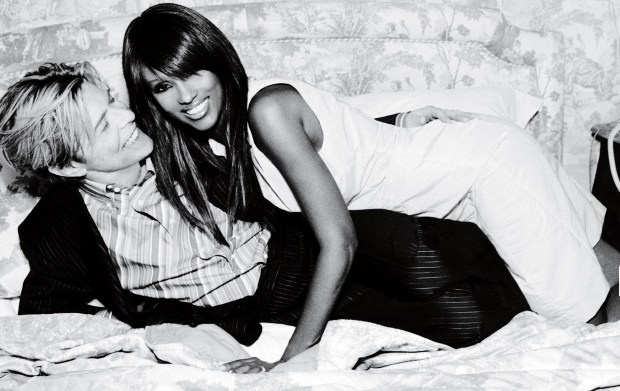
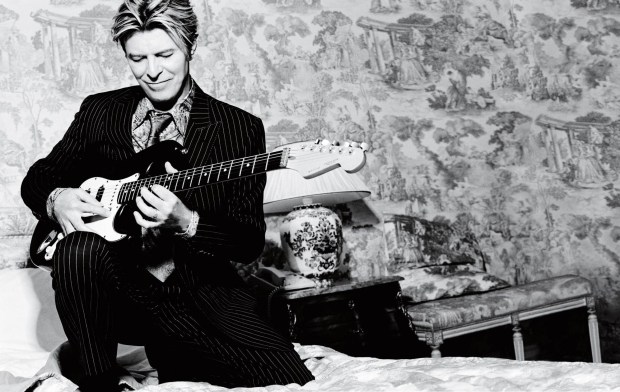
Exhibit B: Tommy Hilfiger, 2004

daveiman4.jpg

In this black-and-white print campaign, Bowie and wife Iman are photographed glamorously doing everyday things, both at home and out and about. These are beautifully shot, but what’s striking is how much genuine fun they seem to be having — I don’t think I’ve seen such easy chemistry and palpable joy in any other photoshoot, advertising or editorial, ever. This campaign relies on pure rock-star coding, and includes shots with a guitar and a photo in the car that looks like a paparazzi snap, to great effect. It’s glamorous, sexy, fun, and kinetic, and impossible to take your eyes off of, and truly one of the best campaigns I’ve ever seen. This was Hilfiger at his peak — in touch with what is classic and cool, and thoughtful about the kinds of images and aspirations to which his audience responds. He needs to get back to a Bowie-Iman level with his brand, and present content like this with real cultural icons, and stop trying to shill Gigi Hadid in a rastafarian colored woven bikini top.

Starman is the ultimate ad-man, since he stands for both an iconic rock & roll star and a complete chameleonic enigma. Louis Vuitton and Tommy Hilfiger were so smart to spot this and play up one or both of these qualities in their advertising. I wish we could have had one more — Thierry Mugler’s Alien would have been too easy, and a Jurgen Teller Céline ad would have been wonderful. I’m also glad that Bowie didn’t take himself too seriously to not want to appear in ads — that speaks volumes about his cool, down-to-earth nature, even if he did fall to earth from somewhere else.

D&G’s Modest Proposal


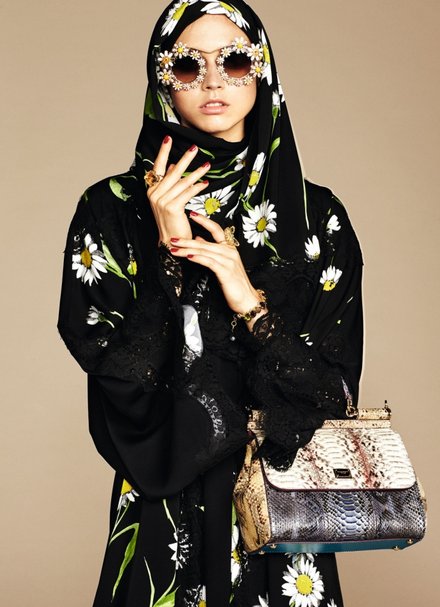
Following on the heels of an H&M ad campaign that featured a model clad in a hijab, today Dolce & Gabbana announced a collection of hijabs and abayas aimed at fashion-conscious Muslim customers.

This is absolutely brilliant business strategy every way you slice it.

While other designers like Donna Karan have done capsule collections aimed at Muslim women during Ramadan, Dolce & Gabbana’s line looks to be a permanent addition to their label, making them the first luxury line to cater to this large demographic — a Reuters report claims that Muslim shoppers spent $266 billion on apparel and footwear in 2013, a figure that is projected to nearly double by 2019.  This line will be a smash hit, especially among the ultra-rich, because it is true to D&G aesthetics — dramatic Sicilian lace, quirky patterns, and baroque accessories — and I predict other designer labels will be following suit shortly.

This is also a great step towards inclusiveness in the fashion industry, which often seems like it’s built upon exclusivity. Additionally, it’s in line with D&G’s recent brand messaging, which suggests that the brand is for people of all ages, genders, and races, by including nonnas in ad campaigns and bambinos on the runway. This message is reiterated by the types of images Stefano Gabbana posts to Instagram with the hashtag #dgfamily and #dgwomenlovemakeup — images uploaded of real women with their makeup products and real families from all over the world with the Dolce & Gabbana branding added to the photos to look like a campaign. Some are glamorous, but many are not, and the result is refreshing, and not at all cloying. Still, it’s fair to note that all of the families that I saw in the gallery are heteronormative, and the D&G “women” only loving makeup is somewhat troubling. D&G has made a great stride forward with their hijab and abaya designs, but still has a way to go.

I’m looking forward to industry responses to this new line. Burberry might like to incorporate similar pieces to reinforce their inclusive messaging and because of how Muslim culture has become a part of Britishness today. I’d love to see Karl put his take on something like this, and it would be a logical step for Hermés, considering their signature accessory. Stay tuned, too for echoes of this on the runways next month — I have a feeling Celine-y modesty might be very in come February.

Tremendous Eye Roll: More on Tommy Hilfiger and Celebrity Collaborations

Save Tommy Hilfiger from himself.

Screen Shot 2015-12-18 at 2.03.07 PM.png

Tommy Hilfiger has announced a design collaboration with Gigi Hadid, a line called Tommy x Gigi, to debut in the fall of 2016.

Cue the largest eye roll physically possible.

Not that this is a terrible idea — it’s not. It’s just bad strategy for Hilfiger in the long run and a case of history repeating itself.

As I discussed in a previous article, Tommy Hilfiger needs to be playing the long game with his brand if he wants it to be an non-laughable, established lifestyle brand again — which, by all the evidence I’ve  seen, is still his goal (luggage, linens, and tablewear are all still for sale on his website, hilariously titled just ‘tommy.com’). His brand collapsed in a cloud of shadenfreude in the early 2000s because of two reasons — it was ultra-trendy, driven totally by logos and random-but-popular celebrity endorsers, and it was publicly owned, which meant it kept churning out insane quantities these truly embarrassing looks long after they were cool too keep shareholders happy. Tommy Hilfiger is now a privately owned company, but Hilfiger needs to guard himself against getting endorsements solely from the hot young stars of the moment, as well as relying too heavily on trendiness.

Which is the problem with Gigi. She is the hottest young thing in both fashion and Instagram culture at the moment, showing up in both ad campaigns and (more and more frequently) gossip columns. She embodies trendiness and mainstream youth culture, the very things Hilfiger should be handling with caution, instead of grabbing with both hands. He’s going to make the same strategic mistake again, and the man can’t help himself.

Hifiger could have made so many other choices of collaborators, ones that would appeal to an older audience with 1) more purchasing power and 2) previous experience with the brand in its pre-hot mess days. These might include Alexa Chung, Leandra Medine, or Solange. He could have still gone for a youthful collaborator, but someone less ubiquitous and bland than Gigi is — someone like Brooklyn Beckham or Tavi Gevinson. He’s a big art collector and could have done something with Jeff Koons, Keith Haring, or Yayoi Kusama (all of whom he collects) to do something more cerebral. But no. The most obvious, popular choice is always Hilfiger’s go-to.

What I would have liked to have seen him do most was to collaborate with another designer for a capsule collection. Gucci just announced a collaboration with Commes des Garçons on a small range of silk scarves — an absolutely brilliant move in line with the Michelesance. Hilfiger should do something similar to this, and specifically partner with a label that can boost his cool factor, like Hood By Air, Public School, or Rodarte.

There are just so many more interesting, smart, and nuanced collaborative options out there for Hilfiger than the model of the moment, and his obstinacy and short sightedness in the matter is off-putting. He doesn’t’ deserve to succeed in this venture, and who knows if he will? Will Gigi be as hot and relevant in a year, when the collection debuts, as she is now? It’s a question Hilfiger should be seriously asking himself. This line may need to move up its timeline.

Report Card: Holiday Ad Campaigns

Tis the season for holiday ad campaigns! Stars! Mistletoe! Enthusiasm! Here’s the how they stack up.

KATY PERRY H&M

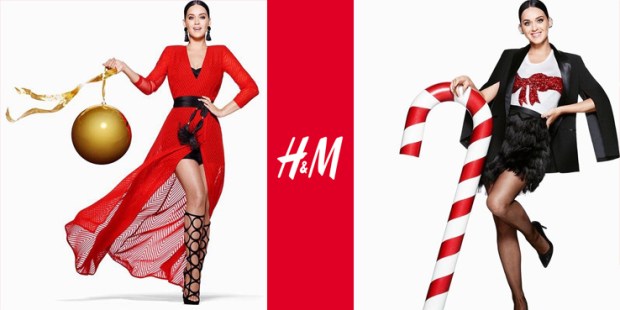
Katy Perry for H&M
Oh. well. Okay.
I cannot fathom with any part of my intellectual consciousness why H&M chose Katy Perry to front this campaign. She irrelevant at the moment, without any new material, and has basically been off the media grid for months. Adele would have been a smarter choice, and would have caused an absolute sensation if she have appeared in the ads in spite of her media-shyness. Sadly, we are instead saddled with Perry posing with candy, yet again. I like the bold black, red, and white color scheme, but that’s the only thing this series has going for it.
Grade: D
tumblr_nxoarxYyEq1qbk8z2o1_500
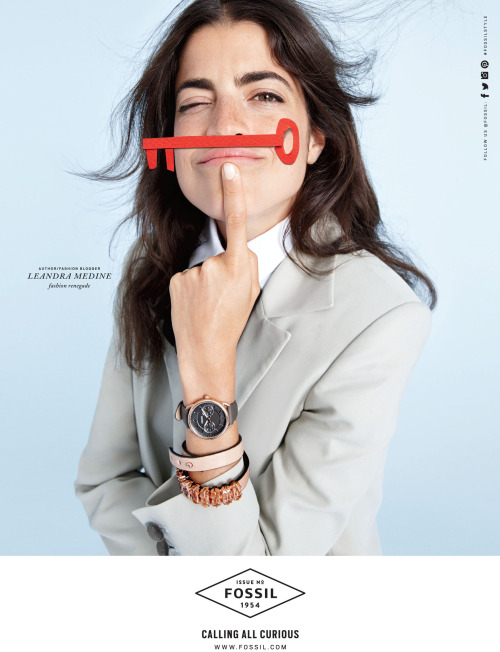
Leandra Medine for Fossil
This is a brilliant choice by Fossil. By choosing someone famous for being in fashion to front the campaign, Fossil is sending a signal that they know what’s relevant in fashion culture, which will cause fashion-forward people to look twice at what they thought was a nonbrand found only in outlet malls. Leandra is someone known for her personal style, which associates individuality and personalization with Fossil, and not just tragic leather goods and watches.She’s shrewd, sardonic,and authentic, and you can guarantee she wouldn’t do this campaign if she didn’t believe in it, adding another layer of credibility. Wear fossil, become a chic, witty, fashion businesswoman? I’ll take it.
Grade: A
Fred Armisen & Carrie Brownstein for Old Navy
Old Navy, in a move of unutterable genius, tapped Portlandia duo Fred Armison and Carrie Brownstein for a holiday short videos. I thought Old Navy was ready to be stuck with a fork when its CEO left to helm Ralph Lauren, but they have, with this casting choice, reinvigorated their relevancy with awareness of the cool, informed, media culture and a sense of humor. Will this help Old Navy compete with fast fashion? Well there’s the problem — Old Navy’s content isn’t good or fashionable enough to really do damage to fast-fashion chains, who clearly don’t rely on advertising to sell their clothes  (see evidence above). It will, however, get Old Navy back in consumers’ consciousness. What they really need is a cult item that will get people back in stores, like their early 2000s flag tees or mid 2000s madras craze, and then integrate cool capsule collections and a fast fashion business model, at least in part, to keep them there. But at the moment, this is a great step in the right direction.
Grade: A+

Kate Spade Aces the Holiday Campaign

MTMzOTA0NTIwOTk5NjM4Mjkw

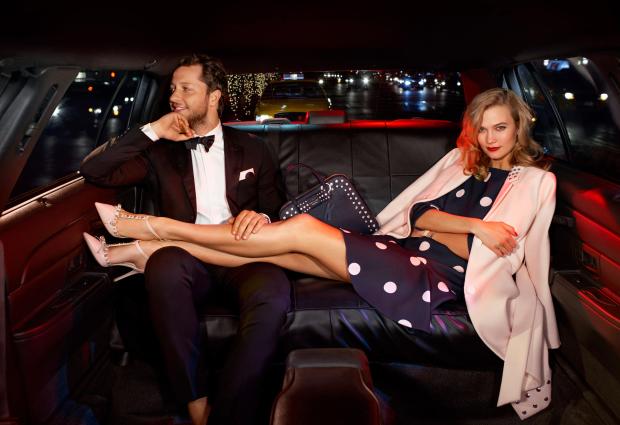
Kate Spade has created another winning advertising campaign with their holiday series, starring Karlie Kloss and Derek Blasberg. A handful of others feature in the seriees, ranging from the cool, young family who own the online store Aloha Picnic, to singer Alice Smith and her very cute toddler, to serious and black-clad literary agent Anne Borchardt.

The campaign of is made up of two photo series: a whimsical up-close portrait session with shades of Wes Anderson, and a fun, spontaneous-looking session in the back of a limo, featuring Kloss in each frame.

The ads are pitch-perfectly on brand, do a lot of work while seeming effortless. Firstly, the campaign subtly challenges the idea that Kate Spade is exclusively for young white women, by including both men and women, people of color, and includes a diverse range of ages, a brand goal that was laid out in the Miss Adventure series. Secondly, the sophisticated photography quality executed by Emma Summerton makes Kate Spade look cool, less fussy, try-hard, and girly, while still maintaining its signature sense of fun.

Kloss and Blasberg are the real stars of the campaign, though, and what a brilliant pick– the two are best friends in real life, and their chemistry and giggly rapport is evident. Using Blasberg, in particular, was an inspired move, and I can’t fathom why he hasn’t been used in advertising before now. At 33, Blasberg has written and edited for nearly every major fashion publication in existence, consulted for labels from H&M to Chanel, published two books and is currently doing a stint at Gagosian Galley. Handsome, witty, and seemingly close friends with everyone who’s anyone, Blasberg is something like the Andy Warhol or Oscar Wilde of today’s fashion set. He’s a stellar choice for the ads because the audience wants to be friends with him, have a career like his, and can’t help but having a bit of a crush on him.

I love the idea of men fronting womenswear campaigns if the brands are in perfect alignment, like Blasberg’s is with Kate Spade’s. Brad Pitt for Chanel No. 5 was a miss, but the highest profile man-for-womenswear ad to date. Men can be an even more powerful visual rhetoric for a womenswear brand than women can – the kind of man you want to be with can intensely reinforce the kind of brand you want to wear. Eddie Redmayne for Burberry will appeal to some women (me) much more than a random oiled-up Versace guy, and vice versa. I hope to see more of this. Tom Hiddleston for Belstaff! Harry Styles for Gucci! Bill Murray for Kate Spade! The possibilities are endless.

Valentino x Goop: Only Somewhat Super

gwyneth-palthrow_goop_valentino_main

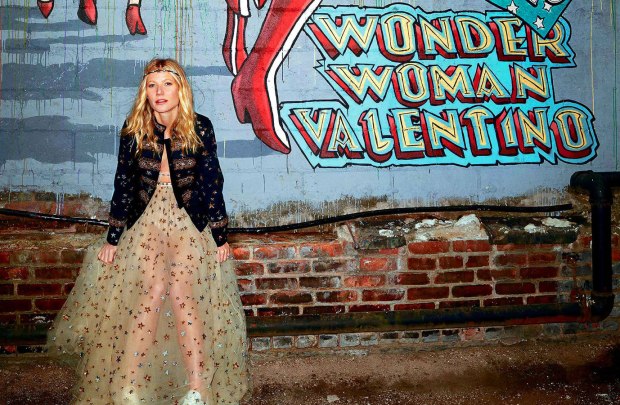
This week, Goop announced a collaboration with Valentino on a Wonder Woman-themed capsule collection. Comprised of 25 pieces ranging from sneakers to gowns, this collaboration is a great coup for Goop – Valentino is by far the highest-profile label Goop has ever partnered with, and Goop can also boast the distinction of being Valentino’s first-ever partnership with an outside label.

The brand pairing is excellent – the major fashion house will boost the much-derided Goop’s credibility, while working with Goop will reinforce the Chiuri and Piccioli-helmed Valentino as being youthful and not without a sense of humor. The Wonder Woman theme is incredibly random, but cute and apropos of the current feminist conversation, as well as an in-on-the-joke move aimed at Paltrow’s critics.

It seems like the perfect partnership – the resulting product, however, is mixed.

The pieces are genuinely stunning in person (I had the pleasure of visiting the Goop Pop-up store in New York yesterday) and beautifully constructed. But the price points are too high even for Goop’s altitudinous norm, with t-shirts and sneakers coming in at about $1,000 apiece, and a leather jacket for $10,000. The gowns, though, are truly special and worth the 5-digit price tags.  Many of the pieces are also hard to wear or too novelty for everyday use, like the star-spangled denim hotpants, the similarly-decorated denim jumpsuit, and the completely sheer t-shirt. If Goop and Valentino were going to pursue these price points, they ought to have incorporated at least a few simpler pieces that would be worth the investment But then again, Valentino isn’t exactly known for its practicality – every piece is something special.

The collection seems to be doing well, with several pieces having already sold out just two days after the line’s debut. Apparently the price points haven’t been too much of a deterrent for online buyers, though most of the women in the pop-up store cast one frightened look at the Valentino rack and hightailed it to the more budget-friendly cosmetics section. Price points more akin to Valentino’s Red collection would have been much more accessible – and would have sold out immediately. Or at least caused a reaction more similar to the opening for Balmain x H&M, and less like white ladies nervously eyeing a $1,000 crown.

I certainly hope to see more high-profile collaborations with Goop and even a brick-and-mortar store in the future. Gwyneth should leverage her celebrity friendships to this end. Could Tom Ford x Goop be next? The world might explode – or at least mine certainly would.

Eating My Hat: DressBarn’s Chic Rebranding

hilary-rhoda-dressbarn

Prior the last two months or so, I would have probably gambled my life on DressBarn remaining the most tragic mall staple of all time, incapable of pulling itself out of the mire of frump or breaking the curse of a name that connotes manure and/or unbecoming girth.

But I would have perished, because it has done both, and spectacularly well, in what may be the best executed re-brand in recent memory.

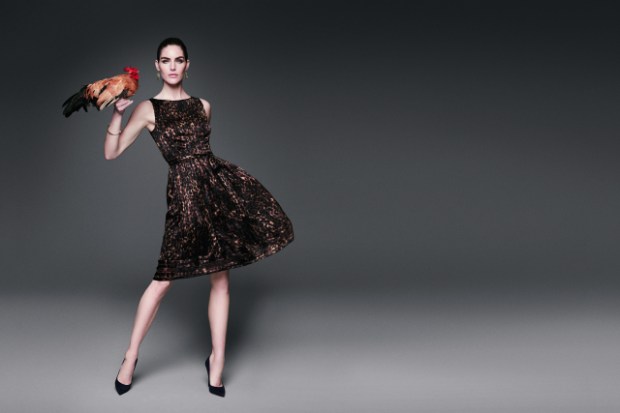
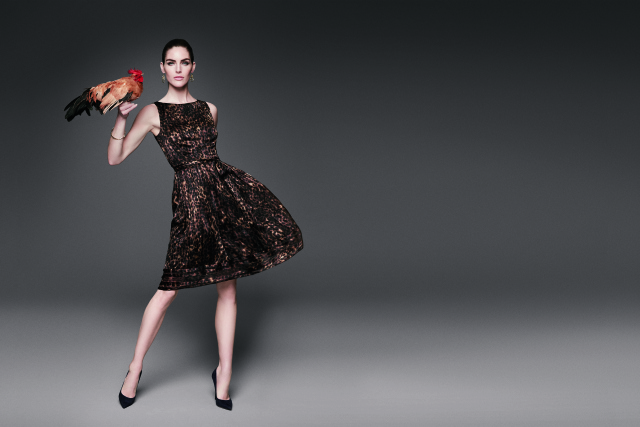
The new strategy was two pronged: to present the brand as real “fashion,” and to acknowledge, with humor, its less-than-chic name and frame it as an asset, not a liability. In their fall ad campaign shot by Patrick Demarchelier (!), Hilary Rhoda wears cocktail dresses designed by the likes of Carmen Marc Valvo and interacts with different farm animals. The accompanying slogans are cheeky acknowledgements that the name is atrocious, like “Don’t Let the Name Fool You” and “Still Hung Up on the Name?,” with some refreshing self-awareness.

The ads are visually arresting, especially the shot in which Rhoda gracefully cozies up to an enormous bull. And the clothes aren’t bad either – her dresses look chic, flattering, and wearable. Rhoda was the perfect model to front this campaign. She’s young and stylish, but has an air of maturity that‘s more in line with the target consumer, and perhaps more importantly, isn’t overexposed (looking at you, Estée Lauder and Topshop). Asking Carmen Marc Valvo to design a capsule collection was another smart move. The target demographic will recognize the name and read it as a stylish but not intimidating choice. Someone like Christian Siriano would be a good choice for next season.

The stroke of rebranding genius is due to a change in marketing management helmed by Lori Wagner, who has previously worked for J. Crew, Nike, Talbots, and more. Apparently, she and her team had considered changing the company’s name, but I think their decision to keep and re-situate it in the minds of consumers was the better choice. People love a heritage story, especially coupled with an underdog element. Other mall staples should take note, especially the floundering Gap, and the identity-less New York & Co. and The Limited.

Will cutting-edge fashion lovers start shopping at DressBarn? No. But a lot of women will. And the ad got me, formerly a vociferous detractor, to visit the company website, which is a big step in itself. I look forward to seeing what Wagner does next, even if I won’t be among the consumers.