Designers

Maria Grazia Chiuri to Dior: A Bittersweet Split

1425333878989.jpeg

Hmmm, is the framing of this photo of Valentino Co-Creative Directors telling? Maria Grazia Chiurri is positioned in front of Pierpaolo Piccioli and staring up, while he looks squarely at the camera. If today’s news is any indicator, then yes, this 2015 photo might tease that Chiuri was considering moving on a over year ago. And that my art history classes paid off and that I paid attention to the body language episode of Tyra circa 2008.

In a completely stunning move, Dior appointed Maria Grazia Chiuri as its new creative director following the departure of Raf Simons earlier this year. Usually  whispers trickle around before an appointment, but that wasn’t the case with Chiuri—I stared at my email inbox completely agog with surprise when the news broke this morning.

Surprised I may be, but I am also delighted. Maria Grazia Chiuri is an incredible designer, and has co-created some of the most beautiful, intricate, and feminine pieces of ready-to-wear and couture humanly conceivable during her nine-year tenure at Valentino—pieces so simple in line yet opulent in fabric so as to make one gasp.

Chiuri will be brilliant at Dior; she understands the pressures and rigor of working at a mega-house, and is a near-perfect match in terms of aesthetics with her appreciation for simplicity and graceful femininity. Beyond the tulle and Roman richness, she also knows how to make money. Chiuri and Piccioli pioneered the incredibly commercially successful Valentino Rockstud accessory line, which, six years later, the public is still hungry for. She knows how to walk the fine line between accessibility and exclusivity, and realizes the importance of refreshing and building on cult items each season to maximize their relevance. Chiuri will also be Dior’s first female creative director in its 70 year history—ironic for a label whose image is so tied up in femininity.

As exciting as this news is, it’s not without a scoop of bitterness. I’m so sad to see this harmonious era of exquisite design and seamless execution of Valentino’s sensibilities come to an end. It never occurred to me that Chiuri was even being considered for this role because I figured that she and Piccioli were a package deal and firmly ensconced at Valentino for many years to come.Why did Dior pick only Chiuri and not the pair? Will Chiuri and Piccioli be any good without the other? Perhaps Dior execs had special insight into their creative process to be able to make that call. We will have to wait and see on these. But as to the question of whether or not Valentino is upset that his natural heir has chosen to go elsewhere, well, I think we have our answer from Giancarlo Giametti’s Instagram today. No one does Italian drama quite like Valentino!


Valentino…Who?

V-TR-DPS_1-righe-8.jpg


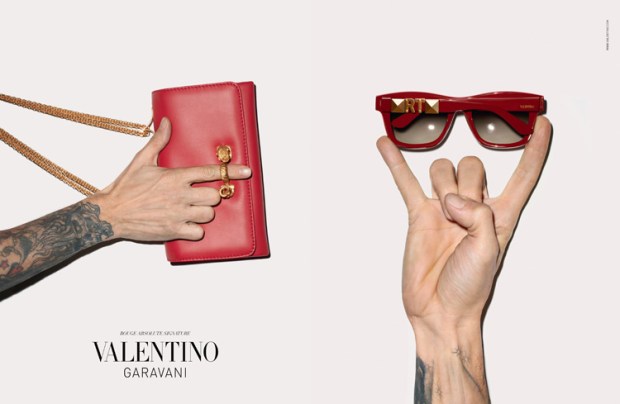
Imagine my surprise when I, a casual and unsuspecting reader, was flipping through this month’s Harper’s Bazaar trying to see how I could take snippets from Karl Lagerfeld’s interview with Kendall Jenner and parse them to look unflattering to her, saw instead a classic Terry Richardson Rockstud ad, which, instead of saying VALENTINO, read: Valentino Garavani.

Not quite a spit take-level of surprise, but it definitely resulted in a squinty “what?”

First it actually took me a minute to put together – what was Valentino’s last name, again? G…something? Not Giametti. I Googled and confirmed that Garavani was indeed the designer’s surname (although his Wikipedia article is simply under ‘Valentino.’) How utterly and completely bizarre, then, to see a kamikaze “Garavani” after all these years of a solo “Valentino.”

Why would Valentino change their advertising out of nowhere to use the last name of the founding designer? It’s like changing the name of Dolce & Gabanna to Domenico Dolce & Stefano Gabanna. Or Prada to Miuccia Prada. Insane! If I, someone who thinks about Valentino on a regular basis can’t pull his last name from a murky corner of my mind, then there is a serious problem with this advertising. People less tuned-in to fashion will think there’s some cool new designer out there named Valentino Garavani. Oh dear.

I then plunged into some deep internet research, which assured me that Valentino is not changing their name, and that Valentino Garavani is a sub-label along the lines of Valentino Red, that encompasses most bags and shoes, including all Rockstud accessories.

The whole thing is still, however, immensely weird. Valentino is the only designer whose fashion house takes his first name, not his last name. We know most designers by their surnames – Armani, Chanel, Dior, etcetera – but we also know their first names – Giorgio, Coco, Christian. Valentino is more like Gucci in that it is, culturally, one word, like Madonna and Cher, and most definitely not Guccio Gucci or Valentino Garavani.

To introduce Valentino’s last name now, eight years after his retirement from the label is odd, but would be completely inexplicable if he were not still involved with the label and a mentor to his successors, Maria Grazia Chiuri and Pierpaolo Piccioli – it’s quite an unprecedented arrangement, as most designers’ tenure at their own houses tend to be lifelong. The three collaborated in creating costumes for Sofia Coppola’s La Traviata, which premiered in Rome mid-May and is the best collaboration between designer and director since Tom Ford dressed everyone his own film. Valentino always sits front row for Chiuri and Piccioli’s shows, keeping his visual presence associated with his brand, and is nearly always out and about (including visiting my former place of work in May 2015, NEVER FORGET), indicating that he’s retired only from designing, and not the public eye or public psyche. When interviewed by the New York Times about La Traviata, he made sure to remind his interlocutor of his energy and enthusiasm for design: “I still have creativity inside…Tomorrow I could do a runway show of 100 dresses with no problem.” This almost sounded like a veiled threat – as if the label is still very much his, and he might at any time decide to re-take its helm. However, I would guess he is having more fun cruising around Capri, as documented on his and Giancarlo’s Instagrams this week, than creating six collections a year at 84.

Close readings of comments aside, I like the relationship that Valentino and Chiuri and Piccioli enjoy: they venerate him, while he trusts them with his life’s legacy. It’s not surprising, then, that they would name a secondary line for him; it just should have been executed differently. Perhaps “Garavani by Valentino” or somehow rebranding the Rockstud line as the “Garavani Rockstud.’ But neither of those has the same iconic look on the page or feel in the mouth – both are awkward to say and somehow anything extra dilutes the his iconic status. My best recommendation is to drop the “Garavani” and have Terry Richardson shoot Valentino, Giacomo and their pugs with Rockstud accessories. His face, his tan, his lifestyle are all iconic and instantly recognizable, even to an audience with only moderate interest in fashion, while his last name is not recognizable to anyone. We’ve been on a first-name basis with Valentino since 1960; let’s not change this intimate and simultaneously larger than life way of talking about him now.


Celeb Spawn: The New Ultimate Aspiration?

Smiths.jpg


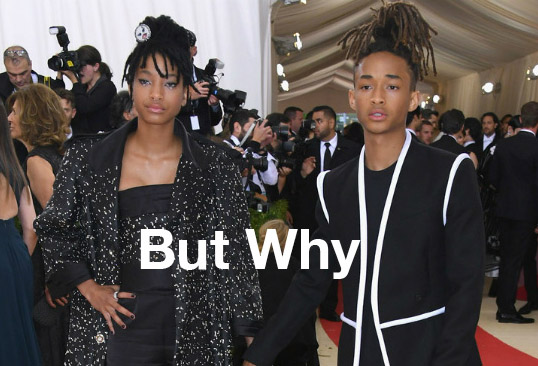
Last week’s Met Gala was swarming with ultra-young second-gen celebrities: Jaden and Willow Smith, (17 and 15, respectively), Hailey Baldwin (ugh; 19), Lily-Rose Depp (16), and Sofia Ritchie (16), just to name a few.

Fashion naturally idealizes and fetishizes youth, and young models are absolutely nothing new: Kate Moss was discovered at 14, and Brooke Shields was also 14 when she shot her infamous Calvin Klein ad. However, the young faces of campaigns today seem to be uniformly, and unprecedentedly, celebrity offspring. This is an easy move for labels to make, as these kids come pre-coded in pop culture, but are they accurately representing their audience’s aspirations? How much advertising power can a teenager with no résumé have? Fashion houses are betting on a lot, judging by the insanely long list of recent appointments.

Willow Smith has recently been named a Chanel ambassador, and Jaden fronted this season’s Louis Vuitton campaign; Kaia Gerber, 14, just landed her first Vogue Paris cover, alongside her mother, Cindy Crawford; Lily-Rose Depp has been a Chanel ambassador for over a year; Lourdes Leon, 19, is the face of Stella McCartney’s new fragrance “Pop;” Romeo Beckham, 13, has modeled in several Burberry campaigns and his brother Brooklyn, 17, has shot them. Sophia Ritchie, Iris Law, 15, and Anaïs Gallagher, 16, and Lottie Moss, 18 are all modeling, the latter to more legitimate success than the others. These teens have nothing aspirational to their resumes like work or personal style, and some of them are only somewhat modelesque in their looks. Their aspirational coding comes exclusively from their last names, which is irritating but not illegitimate: they are able to borrow and transmute codings from their parents, and, since they are so young, fashion labels are able to mold them to fit the labels’ needs. The Beckham boys, for example, have their parents’ pop cultural relevancy and ties to 2000s British nostalgia, while Lily-Rose Depp (and probably soon Jack) can borrow from her parents’ sensibilities for French cool and American eccentricity. It’s easy. Their codes are already in place.

The highest aspiration, then, according to fashion advertisers, is neither youth nor beauty; it is cool parentage, and a built-in cultural coding. Using these kids in ads is both lazy and genius. Celebrity children appeal to several audiences: the older guard who are fans of the parents (although, is anyone actually a fan Will and Jada?), teenagers who follow the kids on social media, and millennials in between who have seen both generations in the tabloids. Situating celebrity heritage as the highest aspiration is also deeply, maniacally brilliant on behalf of brands – you can change your makeup and your clothes, but you can’t change who your parents are. This equals perpetual, unacheivable striving on behalf of their customers trying to actualize the brand’s values. Evil and elegant.

It’s important for old, storied fashion houses to stay relevant, so choosing young faces with social media presences to represent their brands isn’t surprising. But the audience to whom these young celebrity kids most appeal, 13 to 16 year olds, have zero purchasing power. Even if they did, would they buy Chanel products because Willow Smith is the face of the company? My guess is a laughable no – Karl and Teen Vogue are trying overly hard to make Willow happen. Perhaps these labels are playing the very long game? Courting ultra-young teens for a period of 10-15 years by pretending to understand their dreams and aspirations until this group does have spending power to use on these labels? If so, this is also wicked and exploitative and brilliant and I love it. My guess, however, is that it’s just a ploy for immediate relevancy with the social media set, and an opportunity to create cheap, easily disseminated assets.

Using these second-generation celebrities in ads makes total sense for labels – they’re prepackaged, recognizable to multiple audiences, and create media buzz. But I don’t think any of these kids are particularly compelling, with the exception of Romeo Beckham, who has charisma for miles. I think fashion houses would be better off scouting new, cool, young talent – look at Lucky Blue Smith and family! They are so much cooler than the other Smith siblings, and better um, adjusted. Using genetics as the highest aspiration, although brilliant marketing, is also slightly unsettling. If labels are going to use nepotism cases in advertising, they ought to wait until the kids are older teenagers and have something to their résumés, both to send a better message to their younger audiences, and to avoid a slight Eugenics-y undertone.

Me? I deeply, desperately want to be a part of the Lucky Blue Smith family and hourly sigh with relief that Will and Jada are not my parents. Also, if I were a Gallagher or a Law, I would have a deep Electra complex, so dodged a bullet there! I think brands might want to carefully consider the middle millennial band before slapping a teen with famous genes in an ad campaign – this is the audience with upcoming purchasing power who will be turned off by falsely precocious rich kids who know nothing about fashion or culture and are trying to capitalize on their parents’ social codings. There are exceptions, naturally, like Kendall Jenner and Georgia May Jagger, who have become extremely successful in their own right. But for the rest of them? Give me a break, and give me someone actually aspirational, in my own age bracket, like Alexa Chung or Mary-Kate and Ashley Olsen, or in the next, like Isabella Rossellini (famous parents, extraordinary résumé), Linda Rodin, Charlotte Rampling, Grace Coddington, or Catherine Denuve – women I can actually look up to, and not teens I sneer at. Except for Romeo Beckham. I would literally buy anything he advertises.


Cool Teens Appreciation Gallery feat. Romeo!!! He is so impish and charming!!!!

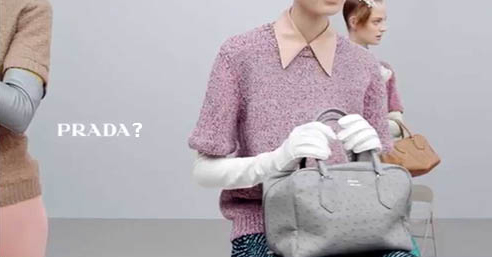
I’m Starting to Worry About Prada

Untitled-1.jpg


Prada is deeply fabulous. It’s certainly the most cerebral luxury label in existence; Miuccia is a great, eclectic thinker (the woman has a PhD and was once a communist and a mime) and has built an empire on making everything ugly suddenly and quietly fresh, chic, and sophisitcated. Think of the pop-cultural cache Prada has acquired: the devil doesn’t wear Chanel or Fendi or even Hermès – it’s unthinkable! – she could only wear Prada because she is sly and brainy and utterly wicked.

But Prada has coasted on this cultural awareness and positive name recognition for the last few years, and has made some strategic blunders because of it. The first misstep was to try to situate Prada as an Italian Hermès or Chanel, pushing the shoes and bag sales and downplaying the apparel, which is their biggest strength. This was an idiotic and, frankly, lazy move. The Galleria tote, while classic in shape, doesn’t have the historical ladylike appeal of a Lady Dior, the aesthetic perfection of a Kelly or Birkin, or even the modern cool of a Saint Laurent Sac De Jour or Balenciaga Le Dix. It should never have been a selling staple. Prada’s classic pumps are lovely, but a more flashy consumer is going to buy the Louboutins, the cooler consumer the Saint Laurents, and the more classic consumer the Manolos (though she would consider the Pradas).  These types of  items are pillars of the brand, certainly, but cannot prop up the label on their own.

The second disaster was to expand too rapidly, especially in Asia. Prada currently has over 600 stores across the globe (Chanel has 120, Hermès has 311) and has saturated the market. Whose idea was this? Have they never heard of exclusivity? What on earth?

Because of the strategy to become an luxury brand in the highest, almost unreachable echelon and, simultaneously, pulling a Coach circa-2005 move and flooding the market, Prada now finds themselves with plummeting share prices and quickly-dropping margins.

How can Prada fix this? Let me count the ways.

First, they need to shutter about half of their stores.This will be an embarrassing  admission of defeat, but it’s necessary to move forward. It just has to be done.

Secondly, they can shift some of their focus back to the incredible apparel that Miuccia creates season after season. It’s less accessible than a bag or a shoe, but will certainly appeal to some bands of buyers that are ignoring Prada for the visual confections coming out from Gucci or Dolce & Gabbana.

Next, they need a cult item. This is where the bags and shoes can come back in. Prada needs an equivalent to the Céline Phantom or Valentino Rockstud. Something that is coveted and receives blog attention, highly-priced but still accessible, and draws focus back to the label as a whole, which brings buyers back to the apparel as well as the accessories. They an also capitalize on 90s nostalgia, their heyday, when creating and advertising this item.

It would also be a great idea for Prada to move into cosmetics – they are the only major luxury brand (that doesn’t specialize in leather goods) to not have one. They need to situate a line in the price range of Chanel with the quirk of Marc Jacobs, or they could give sister brand Miu Miu a line,and have even more fun with it at a slightly lower price point. This will be a great way for everyone to get a piece of Prada without creating a state of emergency by overloading the market. And don’t forget the profits –  labels make serious cash on their cosmetic lines, which would help Prada offset the current slump.

Prada is too good, too unique, too culturally iconic to let dwindle into Coach-dom. They need to find a way to re-situate themselves, similar to how Gucci has done recently, and embrace their status as a quirky, large-but-not-behemoth luxury brand. Prada is so special, both in the fashion and larger cultural community that no one would want to be a Vuitton when they could be a Prada – and the brand would do well to remember that.


Gallery of vintage Prada glory below. Prada keeps an extensive archive of ads and shows here.


Hediproof: Safeguarding Against the Slimane-Effect at Luxury Houses

apr16-01-74968162-700x394.jpg

At the close of 2015, Bridget Foley of WWD made the argument that the era of the designer as the deity is over — houses and execs have regained the upper hand in the power struggle between the suits and the creatives, as demonstrated by the oustings at Donna Karan and Lanvin.

This most recent round of musical chairs, however, indicates quite the opposite: designers really hold the cards, and too many of them – to devastating effect when he or she exits a company after a short period of time.

Hedi Slimane’s departure from Saint Laurent after a blip of a tenure is deeply troubling, much more so than those of Raf Simons and Alexander Wang. Slimane has, per his exit statement, executed a “complete repositioning of the brand” in his own skinny, kohl-rimmed aesthetic, changed the brand’s name, and relocated it to Los Angeles, only to abandon it in a matter of four years.

It doesn’t matter if you like Slimane (I don’t), his aesthetic vision (I don’t), or even think he is the “Steve Jobs of Fashion,” as Umair Haque at Harvard Business Review apparently does (don’t make me laugh). This move is cavalier and shockingly irresponsible, both on the part of Kering and Slimane. If a designer is given a historically and culturally storied label carte blanche and carries out sweeping, extensive changes, he or she has an obligation to the brand for an extended period of time – think Ricardo Tisci, who has been at Givenchy for a decade – or the label has the responsibility to placate the designer until the new branding can take root. The brand must come first, otherwise, brand identity will plummet into flux, and the label’s cultural coding will become murky. This is sad to see happen in the case of Yves Saint Laurent, but is truly scary if designers at other labels continue this precedent of micro-tenures. What will be left of these brands, many of which have been carefully crafted over the course of decades, if creative control is changing hands more frequently than presidential elections are held?

Houses need to figure out a way to retain control of their brands’ core identity over every other aspect of their company, including media popularity and short-term financial success, like the kind that Slimane brought to Saint Laurent, because this is where the company’s value lies. This might be done contractually, though, as Vanessa Friedman points out, the average designer contract is three years, and many designers would be happy to sign skimpy one-year contracts. But with longer contracts come must more creative freedoms, which might land a label between a rock and the current YSL place. I don’t have a good answer to this, and by all means, let me know if you do, but this should be of paramount importance moving forward for all new hires at luxury houses – Kering better have Anthony Vaccarello locked in for a decade.

The other component of maintaining brand identity long-term is considering how to deal with a designer’s short legacy at a house, especially in today’s media climate. When Alexander McQueen left Givenchy in 2001 after five years and just-okay designs, it was not cause for DEFCON-one media strategy, because there was no social media to contend with. McQueen for Givenchy is now thought of with benign positivity because it was only documented in traditional media. Saint Laurent has boldly chosen to completely wipe their Instagram account (their only post is a photo of Vaccarello announcing his appointment) despite Slimane’s popularity on the platform. This is absolutely the right move – trying to situate the very-different Slimane era within the larger 55-year brand history is not worth the hassle. Slimane will be the one remembered in that partnership, not the house, and they are better off starting from scratch and regrouping under a new leader.

It’s clear from Hedi Slimane’s feckless despotism that designers still hold the power in their relationships with luxury houses, and that houses need to implement safeguards for their brands, whether that means more creative contracts, media contingency plans, or both. I’m looking forward to seeing what Anthony Vaccarello will do, but I swear, if Hedi goes to Chanel, I will become a lawyer with the sole purpose of blocking him from coming in like another wrecking ball.

A Tale of Two Fragrances, or Burberry’s Continued Asininity and Jo Malone’s Quiet Success

B3-Sampling-image-main.jpeg
British brands Burberry and Jo Malone have each come out with a new fragrance campaign in the last week —Burberry’s for a new product, Mr. Burberry fragrance for men; and Jo Malone’s for a new concept: combining two existing scents into a personalized fragrance. Burberry should have aced the campaign, a short film directed by Academy Award winner and overall cool-coded Steve McQueen, but came up short; while Jo Malone, a label that rarely advertises, perfectly executed a simple visual campaign that capitalizes on the trend of personalization —ironically, a trend on which Burberry was on the forefront about two years ago, with their monogrammed ponchos and My Burberry fragrances.
 

 Mr. Burberry is Burberry’s first fragrance aimed exclusively at men — their other fragrances, like London, Brit, and The Beat all have a men’s and women’s component. This is a a smart move considering the growing interest and media coverage of men’s fashion, especially among younger audiences. It’s interesting when a brand choose a prefix as a fragrance name since it indicates that wearers of this fragrance, more than any of the other fragrances by the label, epitomizes the brand values. Remember the Sofia Coppola-directed videos for Miss Dior? Now those were the days.

This new video ad expands on the new, grittier direction Burberry is trying to take in order to woo the snapchatting, Silmane-devoted crowd. This marketing strategy is ludicrous, as I’ve explained in an earlier post, but Christopher Bailey is sticking to his guns. Steve McQueen directs the video, which is a brilliant choice, because he’s both an ultra-cool and critically acclaimed Londoner; someone like Tom Hooper would have been iffy. As a result, the video, which depicts a couple in a Piccadilly Square hotel room (quelle touristy!), looks like Shame without the pleasant physical appearance of Michael Fassbender — long shots that go on to the point of awkwardness, and a slightly unappealing, realistic portrayal of everyday events. It’s supposed to be glamorous, and some people will find it so — online publications have hailed it as “steamy” — but it’s not Burberry’s signature strain of sophisticated and subtle British glamour.

And then there’s the sex. Burberry has historically been superb at implying intimacy and  eroticism without actually portraying it — think of the smolderingly mysterious Hugh Dancy and Kate Moss ad for Burberry London, the 2005 Kate Moss ads with handsome strangers in the background, and the playful chemistry between Cara Delevigne and Eddie Redmayne in the 2012 campaign. The Mr. Burberry video situates sex front and center, and portrays it without a hint of mystery. It’s rendered awkward and unappealing because of McQueen’s directing style and the film’s overall gritty-lite aesthetic (NB: the male model has a chest tattoo and a pinky ring). It’s an off-brand misstep that unfortunately defines the video, and if Bailey’s not careful, will start to define the brand identity. Maybe they should change the name from Mr. Burberry to Mr. Grimy Quasi Burberry Offshoot Sister Line for Youths who Like Jayden Smith.

What Bailey should have done is take advantage of a great impending pop-cultural moment and on-brand stars and hired Kenneth Branagh to direct Richard Madden and Lily James in a short film for the fragrance. Freakishly attractive Madden and James will star together this summer in Branagh’s Romeo and Juliet in London. What could be more British, cool, and weighty-yet-accessible than this duo, Branagh, and Shakespeare?

Kbjh8EDWy_O8.jpg


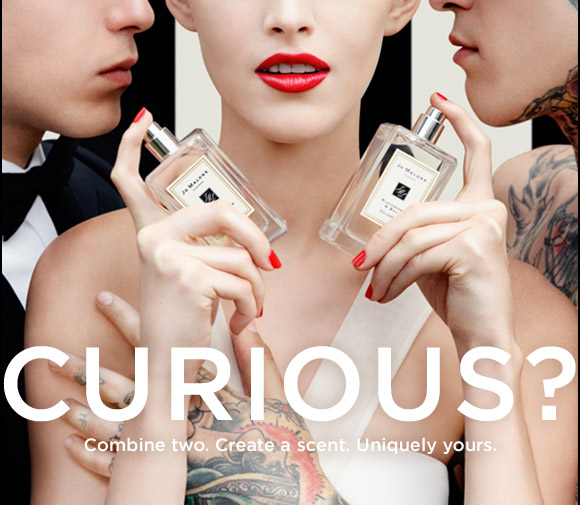
Jo Malone, on the other hand, implements the classic tropes of the bad boy and the ménage-à-trois to explain their new fragrance personalization concept. Titled “Curious?,” the ads feature a perfectly polished Jo Malone girl flanked by her usual type, a handsome, tux-clad man on one side, and a shirtless, heavily-tattooed guy on the other. Cheeky, flirty, and visually engaging — I like that we don’t see the models’ eyes— the ad encourages customers to embrace both the classic and the edgy parts of their tastes to create a scent unique and meaningful to them. This ad is still on-brand for Jo Malone, but gives the label a younger feel, while still maintaining their sense of feminine, English reserve, Sex here is intimated, which actually gives the ad more narrative latitude — the viewer has to do the guesswork, which forces them to be more visually and intellectually engaged in the ad, especially compared to Mr. Burberry’s awkward voyeurism.

The lessons here? Sex sells, but it sells better when it isn’t completely laid out to the viewers; both Burberry and Jo Malone are trying to reach new audiences, but while Burberry is veering dangerously off-track with their new aesthetic implementations, Jo Malone is fleshing theirs out with bolder advertisements. A label must strike a happy medium between what its core identity and what will appeal to a targeted audience when trying something new —like Jo Malone does here —while guarding against pandering to that audience.

The other lesson is to hire Kenneth Branagh for anything and everything, but you already knew that.

Report Card: S/S ’16 Ad Campaigns

The new ads are in, and the results are not great my friends. Brands and spokespeople were mismatched, art direction was lackluster, and ads had a somber quality to them, perhaps stemming from the recent upheaval in the industry and the hit that the luxury markets have taken in China. Let’s discuss.

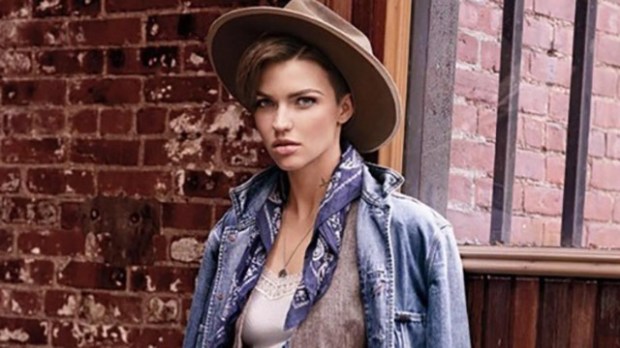
Ruby Rose for Ralph Lauren Denim Supply

640_ruby_rose_hailey_baldwin_ralphlauren_010615.jpg

Oh. Oh dear. This keeps eliciting laughs from me. I know Ralph Lauren is under new management and in desperate need to project a younger, cooler image (may I remind you that Ralph Lauren is a major sponsor of Masterpiece Theatre). It’s like they watched The Grapes of Wrath  on a TV with poorly-operating antennae, put on a blindfold, and threw a dart at a young celebrity that codes for cool and edgy. This is a tragic mismatch, and the result is schadenfreudeish. The corresponding video is even worse, bringing this depression-era Madewell shopping spree to life — the only redeeming quality of the digital component is the presence of a hedgehog.

Who would be a better face of Ralph Lauren (providing there’s better art direction)? It’s tough to say, seeing how this big brand has become amorphous and bloated by offshoot lines in the past ten years. I would go for an all-American face, like none other than Lauren Bush Lauren. She’s close to the brand, yes, but she’s an accomplished social entrepreneur with ties to two American dynasties — and Ralph Lauren is all about living the American dream. And if Tom Ford can star in his own campaigns, LBL can advertise for her in-laws.

Grade: D


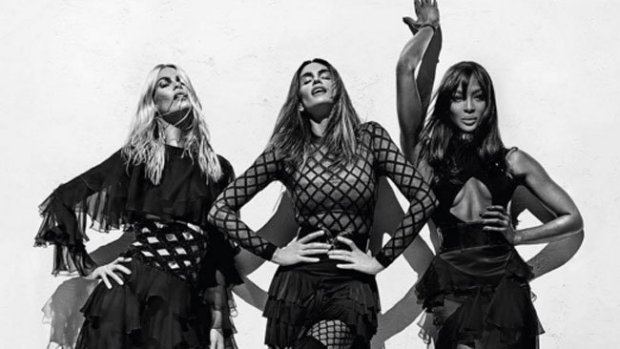
Claudia Schiffer, Cindy Crawford, and Naomi Campbell for Balmain

dynamic_resize.jpeg

This is great. It’s all the glamour and drama associated with Balmain, but without the off-putting high-maintenance flashiness. The black and white is subdued, and a nice departure from the garish colors that we’ve seen from Balmain recently, but there’s so much movement that it’s still electric — Cindy’s face and body is exquisite here.

Choosing the original Supers to font this campaign was a great move, because it capitalizes on 90’s nostalgia, and restores some sophistication to the brand after last season’s Jenner sisters ad. It’s also nice in conversation with the Balmain x H&M campaign, which featured the “Supers” of today, Gigi, Kendall, and Jourdan, whose looks mirror those of Claudia, Cindy, and Naomi.

Grade: A-


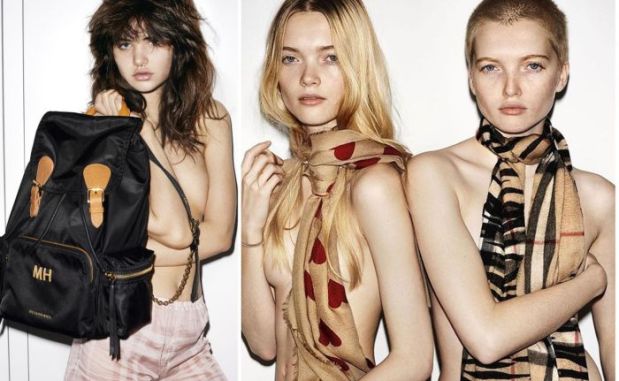
Assorted Teens for Burberry 

burberry-1.jpg

Burberry is catering to a younger crowd with this campaign, with its choice of up-and-coming young models like Ruth and May Bell and Dylan Brosnan, its debut of Snapchat (why?), and the grittier aesthetic portrayed here with a Juergen-y high-exposure flash. This makes sense, given that Burberry’s sales were down the last quarter, and Christopher Bailey has been under pressure to prove himself as CEO. Digital innovation under his guidance got the brand to where it is today, so it’s natural that he would double down on this strategy when he’s feeling the heat.

I’m not sure this is the right tack, however. It’s incredibly alienating to more sophisticated buyers and cheapens the brand’s heritage history by making it seem young and ephemeral. Although it’s important to stay relevant to a younger demographic, teenagers aren’t the group with the purchasing power Burberry needs. They need to keep their messaging consistent with what they did in their holiday campaign, and sell aspirational, inclusive, glamorous, British sophistication, which is what they do best.

Grade: C-


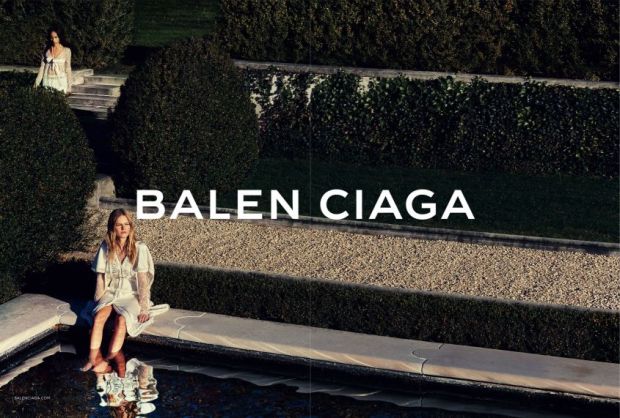
Zoë Kravitz and Anna Ewers for Balenciaga

balenciaga-zoe-kravitz.0.jpg

Finally! Someone took my advice and put Zoë Kravitz, intriguing chameleon of cool pedigree, in an ad campaign. I love the sleepy, romantic panned out shot of the two women, but the close-up shots are empty, uninteresting, and tell me nothing about the brand.

This is not a great way for Alexander Wang to end his short legacy at Balenciaga — this looks hastily done and doesn’t come across as a thoughtful farewell. If he were going to cop out, he ought to have shot Kravitz holding the Le Dix bag and called it a day. (Does anyone know if the label will continue to make these post-Wang? If not, I’ll need to acquire a loan immediately.)

Grade: C-


D&G’s Modest Proposal


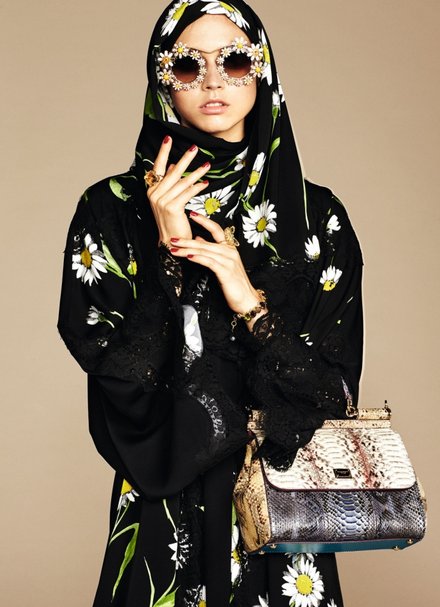
Following on the heels of an H&M ad campaign that featured a model clad in a hijab, today Dolce & Gabbana announced a collection of hijabs and abayas aimed at fashion-conscious Muslim customers.

This is absolutely brilliant business strategy every way you slice it.

While other designers like Donna Karan have done capsule collections aimed at Muslim women during Ramadan, Dolce & Gabbana’s line looks to be a permanent addition to their label, making them the first luxury line to cater to this large demographic — a Reuters report claims that Muslim shoppers spent $266 billion on apparel and footwear in 2013, a figure that is projected to nearly double by 2019.  This line will be a smash hit, especially among the ultra-rich, because it is true to D&G aesthetics — dramatic Sicilian lace, quirky patterns, and baroque accessories — and I predict other designer labels will be following suit shortly.

This is also a great step towards inclusiveness in the fashion industry, which often seems like it’s built upon exclusivity. Additionally, it’s in line with D&G’s recent brand messaging, which suggests that the brand is for people of all ages, genders, and races, by including nonnas in ad campaigns and bambinos on the runway. This message is reiterated by the types of images Stefano Gabbana posts to Instagram with the hashtag #dgfamily and #dgwomenlovemakeup — images uploaded of real women with their makeup products and real families from all over the world with the Dolce & Gabbana branding added to the photos to look like a campaign. Some are glamorous, but many are not, and the result is refreshing, and not at all cloying. Still, it’s fair to note that all of the families that I saw in the gallery are heteronormative, and the D&G “women” only loving makeup is somewhat troubling. D&G has made a great stride forward with their hijab and abaya designs, but still has a way to go.

I’m looking forward to industry responses to this new line. Burberry might like to incorporate similar pieces to reinforce their inclusive messaging and because of how Muslim culture has become a part of Britishness today. I’d love to see Karl put his take on something like this, and it would be a logical step for Hermés, considering their signature accessory. Stay tuned, too for echoes of this on the runways next month — I have a feeling Celine-y modesty might be very in come February.