Advertising

Eating My Hat: DressBarn’s Chic Rebranding

hilary-rhoda-dressbarn

Prior the last two months or so, I would have probably gambled my life on DressBarn remaining the most tragic mall staple of all time, incapable of pulling itself out of the mire of frump or breaking the curse of a name that connotes manure and/or unbecoming girth.

But I would have perished, because it has done both, and spectacularly well, in what may be the best executed re-brand in recent memory.

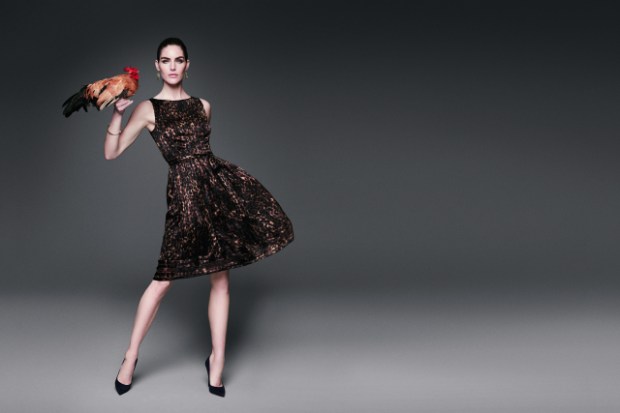
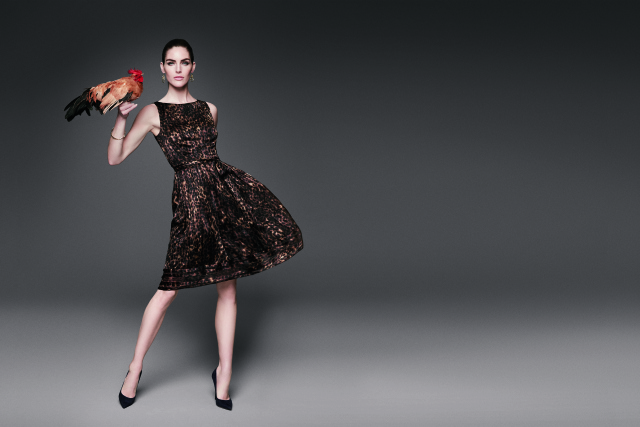
The new strategy was two pronged: to present the brand as real “fashion,” and to acknowledge, with humor, its less-than-chic name and frame it as an asset, not a liability. In their fall ad campaign shot by Patrick Demarchelier (!), Hilary Rhoda wears cocktail dresses designed by the likes of Carmen Marc Valvo and interacts with different farm animals. The accompanying slogans are cheeky acknowledgements that the name is atrocious, like “Don’t Let the Name Fool You” and “Still Hung Up on the Name?,” with some refreshing self-awareness.

The ads are visually arresting, especially the shot in which Rhoda gracefully cozies up to an enormous bull. And the clothes aren’t bad either – her dresses look chic, flattering, and wearable. Rhoda was the perfect model to front this campaign. She’s young and stylish, but has an air of maturity that‘s more in line with the target consumer, and perhaps more importantly, isn’t overexposed (looking at you, Estée Lauder and Topshop). Asking Carmen Marc Valvo to design a capsule collection was another smart move. The target demographic will recognize the name and read it as a stylish but not intimidating choice. Someone like Christian Siriano would be a good choice for next season.

The stroke of rebranding genius is due to a change in marketing management helmed by Lori Wagner, who has previously worked for J. Crew, Nike, Talbots, and more. Apparently, she and her team had considered changing the company’s name, but I think their decision to keep and re-situate it in the minds of consumers was the better choice. People love a heritage story, especially coupled with an underdog element. Other mall staples should take note, especially the floundering Gap, and the identity-less New York & Co. and The Limited.

Will cutting-edge fashion lovers start shopping at DressBarn? No. But a lot of women will. And the ad got me, formerly a vociferous detractor, to visit the company website, which is a big step in itself. I look forward to seeing what Wagner does next, even if I won’t be among the consumers.


Label Consolidation and British Stars on Trampolines: This Week In Burberry News

https://www.youtube.com/watch?v=961k-cHjMLk

Last week, Burberry announced their decision to roll up all of their lines – Brit, London, and Prorsum – into one label. Henceforth, everything will be known as simply “Burberry.”

This decision follows similar moves other luxury labels have recently made to get rid of their “junior” lines: D&G and Marc by Marc Jacobs have both became defunct in the last year. Burberry’s consolidation is much more akin to Victoria Beckham’s swallowing up the lower-priced Victoria, Victoria Beckham (although London couldn’t exactly be seen as a junior line, pricewise).

Does this make sense from a business perspective? I suppose. To the untrained shopper, the different labels might be confusing. But I think Christopher Bailey ought to have cut out London, and kept Brit and Prorsum as bookending collections – but perhaps this is my own sentimentality talking.

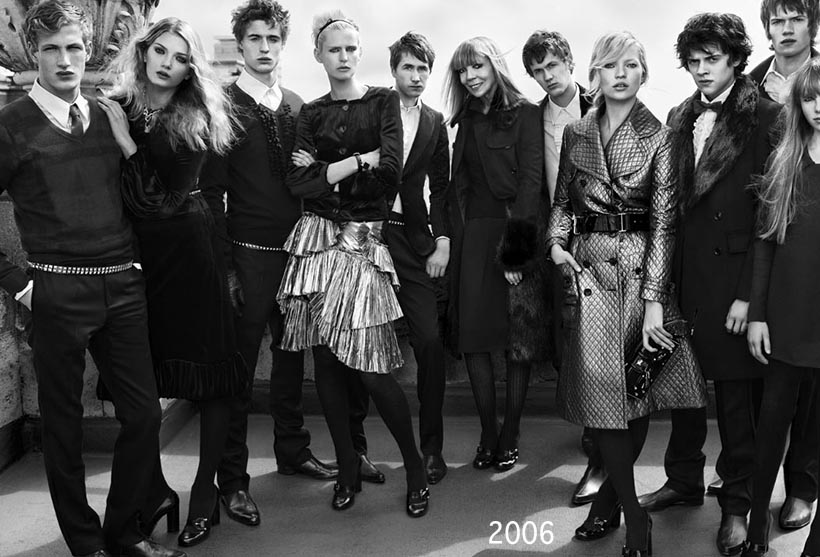
When I was first discovering fashion, Burberry was the brand I deeply identified with, soul-loved. I obsessed over it; the black and white ads covered my walls (and still do in my childhood bedroom); I finally felt like a world understood me and my interests and tastes and aesthetics. I would look at the Brit line on Nordstrom.com and think that one day I might be able to afford a piece. I contented myself with the fragrances (this was a pre-Burberry Cosmetics era – imagine!) and then one day, at sixteen, I garnered the nerve to go into a Burberry store with my mother. There was a black eyelet cotton Brit dress on sale. We bought it. It was an important psychological shift for me – I finally owned a piece of the world I wanted to live in. I was me. And I would go on to make wonderful memories whist wearing that dress, and it’s something I will keep forever. Brit’s differentiation from the other Burberry price points made that possible.

Besides my maudlin affection for the Brit line, Bailey should keep it because it’s so distinctive from the runway collections. Brit is made up of classic pieces, like sweaters and polos, starting at about $300, and usually incorporate the house’s logoistic check pattern. It’s a starter line that’s clearly identifiable as Burberry for those who don’t have the budget to afford the higher-priced London line, or a penchant for a pastel trench coat from the Prorsum collection. Without the identifying nomenclature, I feel like Burberry’s enormous inventory will be difficult to navigate, and perhaps turn away new-to-fashion buyers, who only see thousand-pound dresses and leave, unaware that they can afford something less pricey.

And as for Prorsum – Latin for ‘forward’ – that designated the high-fashion runway collections, well that’s a shame to lose. It’s a word that evokes the Burberry knight, and Burberry’s unique ability to move forward stylistically while still remaining a heritage brand. Not to mention its erudition factor – it also brings to mind a romantic vision of Oxford and Cambridge. Something like this, which, coincidentally, is the aforementioned wall décor:

2006-1.jpg~original

I’m sure Bailey has good reason for the roll up – I trust him and his vision for the brand, even though I wish he wouldn’t make this particular move. So who’s next to streamline their label? Kors won’t – yet. There’s too much of a price gap between Michael, Michael Kors and the Michael Kors Collection, and besides, he should want to keep the two separate to placate both the label-toting suburbanites loonies with brand ownership, and the starlets he dresses on the red carpet with a non-embarrassing connotation. Armani won’t yet either. There will always be a Eurotrash market for Armani Exchange on one hand, and a market for sophisticated actors to wear his suits on the red carpet on the other. How are these label stratifications even part of the same brand? They are so antithetical – not at all like Burberry’s or even Marc Jacobs’ lower-priced lines, which simply reflect(ed) the larger brand at a lower price point. I suppose a powerful name can code for a lot of different things to different audiences – but I’m not sure that’s a compliment to Mr. Kors or Mr. Armani.

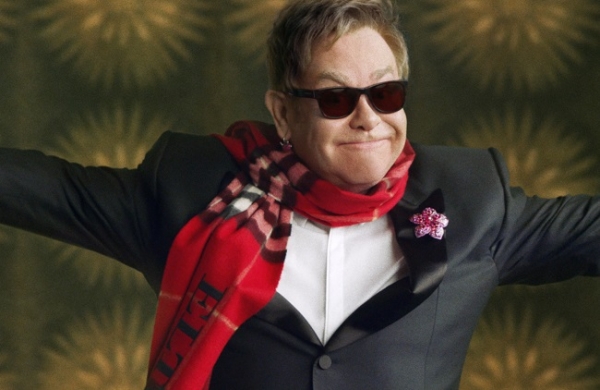
Burberry also debuted its holiday video advert last week. No luxury label does holiday marketing quite like Burberry, and the label delivered once again, with a star-studded tribute to Billy Elliot, with appearances by Romeo Beckham, Elton John, Julie Walters, Rosie Huntington-Whitely, George Ezra, Naomi Campbell, Michelle Dockery, and James Cordon, just to name a few. That’s what’s so special about Burberry – all of these faces perfectly fit the label. It doesn’t matter if you’re male or female, black or white, 13 (Beckham) or 68 (Sir Elton), Burberry is for everyone. They consistently strike a unique pitch of inclusiveness, while still maintaining luxury, aspirational status. Perhaps that’s the heritage factor, but I’d chalk it up to a special British alchemy.

Raf Steps Down: What it Means for Dior, the Designer, and His Successor

Raf+Simons+Christian+Dior+Runway+Paris

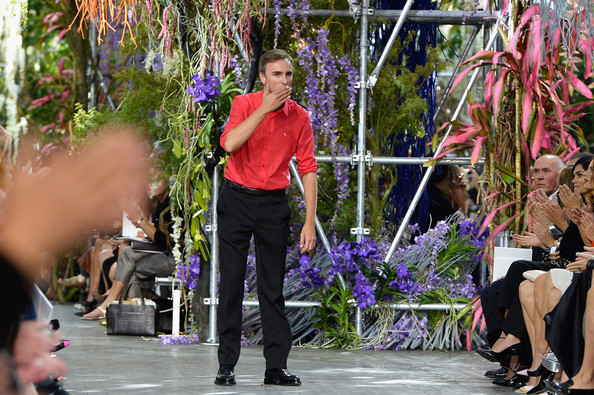
Another designer leaves a major fashion house after only a short tenure. Raf Simons is unexpectedly out at Dior. I was initially astounded to hear this news, but the more I thought about it, it the more it made sense to me. He did beautiful things at Dior, but it never truly felt like he was comfortable there. You can see it in some the clothes, especially later on in his tenure – they’re ladylike, but feel cold and vaguely discomforted. Still, I’m surprised to see him leave so soon, especially after the publicity boost due to the recent release of Dior and I, the documentary charting the making of his first collection at the company.

Hopefully, this also means the end of Jennifer Lawrence as the face of the brand; a completely baffling pairing that benefits Lawrence’s personal brand, but hurts Dior’s. The house desperately needs to re-focus its brand identity, because as it is, they’re gunning to look like Giannini’s Gucci. Under Raf, Dior didn’t stand for anything – I don’t know who the customer is, or what kind of world she inhabits, because all of the advertising was restrained, empty, and faced by a bland big-time movie star — I had to get all of my information about the brand from the runway shows, which, admittedly, were stunning. The ads need to be a more sophisticated (but not boring) version of the vision so perfectly executed by their fragrance campaigns, especially Miss Dior and Dior Addict – French, ladylike, and daring.

What’s next for Raf? I wish he would go back to Jil Sander, an all-time favorite of mine that has crumbled since he left in 2012, but he won’t loop back around to the same company. He will focus on his own label, and perhaps another smaller line. I don’t ever see him returning to one of these mega-houses, even if the fashion cycle slows down to fewer collections per year.

But the even bigger question is who will replace Raf. Will Dior follow the current trend among big houses and pick an unknown? Perhaps, but that move would look trite after the recent Balenciaga appointment. I personally would love to see a woman at Dior. Cathy Horyn teased the possibility of Phoebe Philo on The Cut, which would be sublime; however I don’t think Philo would be willing to split her time between Céline and Dior, especially, as Horyn noted, because she has so much creative control over every aspect of Céline. Nadège Vanhee-Cybulski at Hermès might be a good choice, as would Stella McCartney, although I think, like Philo, McCartney is more invested in her own label at the moment. Kate and Laura Mulleavy would be a unexpected choice, but I think the sisters behind Rodarte are too media-shy to want to helm a major house like Dior. If I were Mr. Arnault, however, I would be pursuing Jonathan Anderson. He’s ultra-talented, young, a media darling, and not afraid of helming a big fashion house. It may be strategically savvy for Anderson to stay at Lowe, though, and build a mega name for himself, much like Philo did at Céline.

I’m sad to see Raf go — I was looking forward to see how he evolved as a designer at Dior. But in any case, I’ll be extremely interested to see who gets the appointment, and what they do with the brand. Stay tuned.